
From Information to Hora’ah: Why Torah Learning Must Be Alive and Relevant

Updated: Sep 7

The word Torah is not simply a name. It defines the very nature of what Torah is meant to be. Torah is milashon hora’ah—instruction, guidance for life. It is not a record of the past or a collection of stories to be understood and then set aside. Torah is meant to inform how a person thinks, sees, and lives.
This definition has direct implications f
or how Torah must be learned. If Torah is hora’ah, then learning cannot remain at the level of information. A child who can translate a pasuk or retell a narrative but does not experience its relevance has not yet encountered Torah in its full sense. They have processed content, but they have not accessed its purpose.
This is expressed succinctly in the teaching of the Alter Rebbe: “Men darf leben mit der tzeit”—a person must live with the times. The weekly parsha is not something to learn about; it is something to live with. It is current. It speaks to the present.
Relevance, then, is not an enhancement to learning. It is the definition of Torah learning.
Why Torah Includes What Might Be Overlooked
This perspective also explains why Torah includes details that might otherwise be skipped. Historical references. Geographic context. Background information that may seem secondary to the storyline. If Torah were simply conveying narrative, these details could be minimized. But Torah is not trying to streamline a story. It is shaping understanding.
When the Torah speaks about places such as Chevron, or about Eretz Yisroel and the Jewish people’s relationship to it, those references are not incidental. They are part of the hora’ah. They define how the events are to be understood and how a person is meant to relate to them. Without that context, the Pesukim remain distant. With it, they become anchored in reality.
These details are not additions to the learning. They are part of the Torah’s message.
Learning, Application, and Independent Mastery
This leads to a more precise definition of learning itself. Learning is not complete when information is understood. It is complete when it is applied—when the Torah informs how one understands and lives. Without application, the learning remains informational. It has not yet become hora’ah.
Accordingly, if a classroom does not reach the point where Torah is experienced this way, independent mastery has not been achieved—even if students appear fluent. A child may read well, translate accurately, and follow the structure of the pesukim, yet still remain dependent if the learning is not applied. They can process what is in front of them, but they are not yet engaging with Torah as guidance.
This also clarifies the role of motivation. When learning is not experienced as relevant, there is no internal reason to continue engaging beyond what is required. The motivation remains external, and progress is limited. This lack of motivation is not incidental; it reflects that the learning has not reached the stage of hora’ah.\
When Torah is learned as guidance for life, that dynamic changes. Application becomes natural, and motivation follows. That is the point at which independent mastery begins to emerge.
Making Hora’ah Visible in the Learning
This is not theoretical. It requires deliberate design in how Torah is taught. Relevance is not something added from the outside. It must be drawn directly from the Pesukim themselves.
For example, when the Torah references the story of Avimelech making a peace treaty with Yitzchak after he nobly doesn’t assimilate, those elements must be understood within the learning. Integrating their historical and conceptual context is not an enhancement—it is a clarification of what the Torah is already communicating.
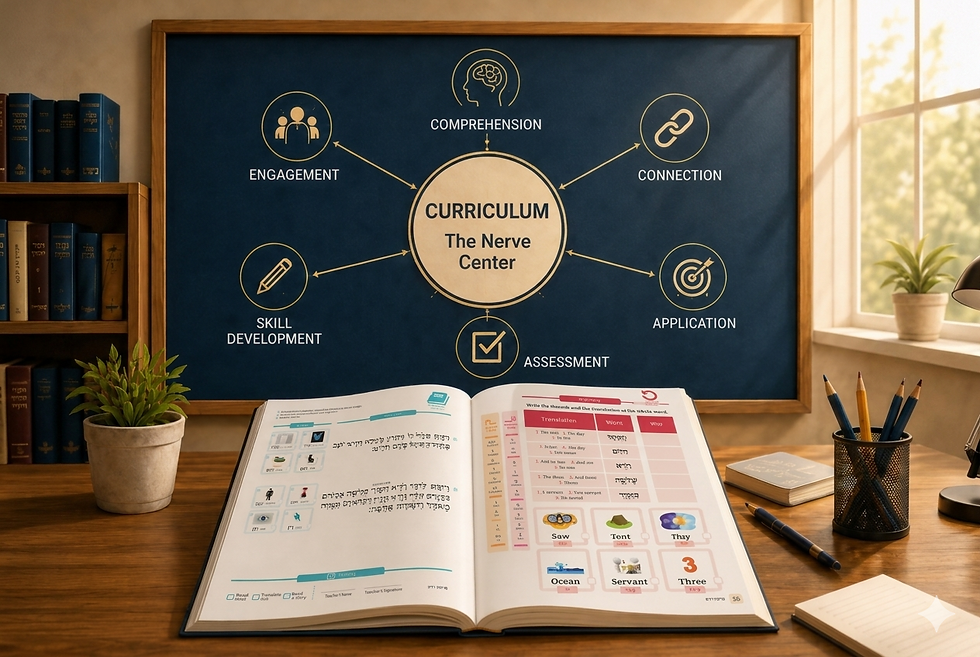
In Torah For Children, this approach is built into the structure of the learning. Contextual information—such as the history of Chevron or the significance of Eretz Yisroel—is presented specifically where it is relevant to the pesukim. The goal is not to expand the material, but to reveal it. As a result, the student does not only translate the text. They understand it within a framework that makes it real and current. The Torah is no longer distant. It is something they can recognize and relate to.
From Learning About Torah to Living With Torah
If Torah is hora’ah, then Torah that is not lived has not yet been fully learned. The objective of Torah learning is not coverage of material, but the development of a way of thinking—one in which the Torah is experienced as guidance.
When that is achieved, learning no longer depends on external direction. The student engages independently, because the Torah matters to them. At that point, the definition of Torah—as hora’ah—is no longer theoretical.
It is being lived.


Comments